

For laser cutting loading, sheet separation, and bending machine loading or unloading, the right vacuum suction cup system is not simply the largest frame or the most suction cups. It should be matched to sheet size, weight, thickness, surface condition, and handling movement.
Driven by industrial automation, more sheet metal processing companies are using vacuum suction cups for efficient and non-marking sheet handling. In many factories, vacuum lifting has become a standard part of production lines because it can reduce manual labor, improve loading rhythm, and protect the plate surface.
However, BILLIONS LIFTER® has also seen a common problem in real projects: when companies purchase this type of equipment for the first time, they may choose an unsuitable system because they are unfamiliar with suction safety and selection logic.
Recommended Selection Method
The best way to choose a vacuum suction cup system for sheet metal is to start with two core rules: let the sheet dimensions decide the frame size, and let both sheet weight and overhang decide the number and layout of suction cups.
Rule 1: Frame size follows sheet dimensions
The frame should match the largest and most common sheet sizes handled in daily production. Oversized or undersized frames can both reduce lifting reliability.
Rule 2: Suction cup quantity follows weight and overhang
The number of suction cups must provide enough holding force while also supporting the sheet so unsupported areas do not bend or leak vacuum.
1. Determine the Frame Size by the Sheet Dimensions
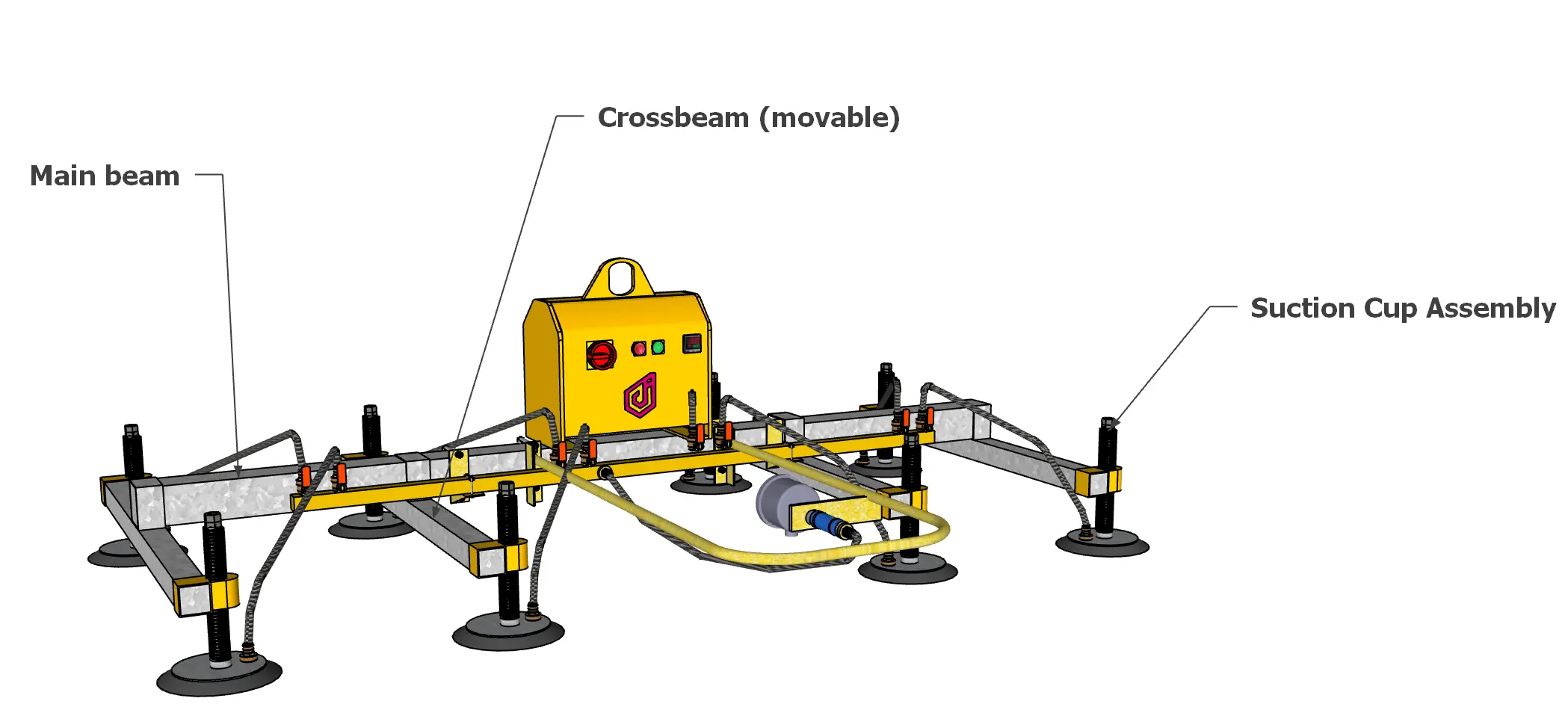
The frame structure of a sheet metal vacuum lifter, including the main beam, cross arms, and suction cup mounting bases, is not better simply because it is larger. A standard frame also cannot fit every production situation. The core basis for frame size is the maximum and most common outer dimensions of the sheets handled every day.
The correct logic is to determine the frame coverage based on sheet length and width, making sure that the distance from the outermost suction cups to the sheet edge, often called the overhang, stays within a reasonable range.
If the frame is too small relative to the sheet, the suction cups will be too concentrated in the center and the edge areas will be unsupported. For thin plates of about 1-3 mm, excessive overhang can cause the sheet to bend under its own weight. Once a gap forms between the suction cup and the sheet surface, vacuum leakage can occur, holding force can drop suddenly, and the sheet may fall.
If the frame is too large, the opposite problem may occur. When handling smaller sheets, some suction cups may not land on the effective sheet area and may pull air directly. The vacuum system then struggles to build pressure, and stable lifting becomes difficult.
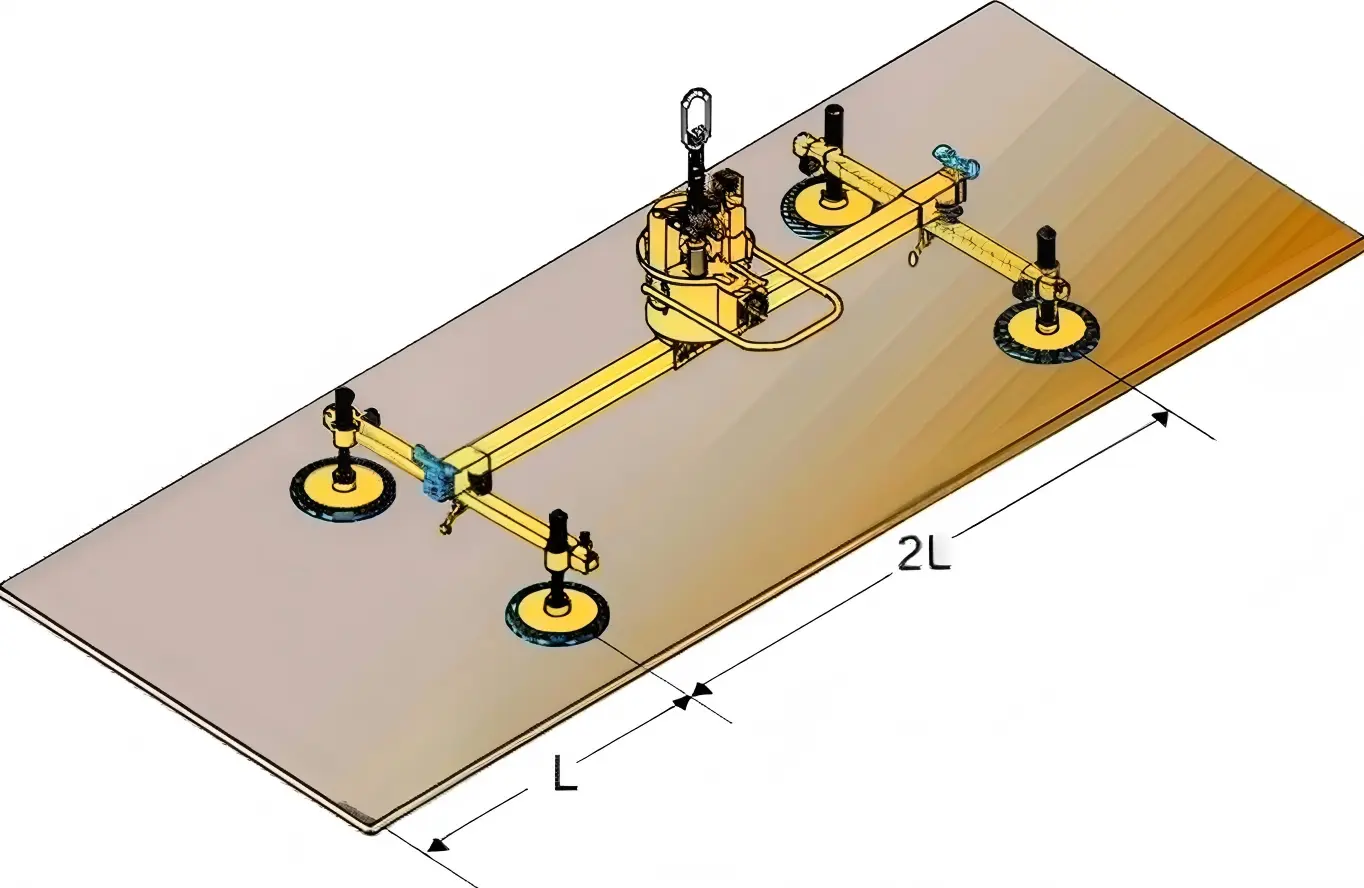
BILLIONS LIFTER® recommends calculating the frame size from the largest sheet first, reserving a suitable safety margin, and then combining material and thickness to estimate the maximum allowable overhang. For production lines that handle multiple sheet specifications, an adjustable or modular frame can help large sheets remain stable while smaller sheets can still be picked up reliably.
2. Determine the Number of Suction Cups by Weight and Overhang
Many users ask a simple question: "My sheet weighs 200 kg, how many suction cups do I need?" In practice, there is no single answer. The selection must satisfy two conditions at the same time: enough holding force and controlled overhang.
Calculate the holding force from sheet weight
Each suction cup has a theoretical holding force at a given vacuum level, but real selection must include a safety factor. For horizontal handling, a safety factor of 2 or more is common. For high-speed robot handling, turning, tilting, or flipping actions, the safety factor may need to increase to 2.5-4 times depending on movement and risk.
The basic method is to divide the maximum sheet weight, including the effect of dynamic acceleration, by the safe holding force of one suction cup. This gives the minimum number of suction cups required for lifting force.
Verify the layout from allowable overhang
The second step is often overlooked. Even when the suction cup quantity meets the weight requirement, the layout may still be unsafe if the cups are too far apart. Excess unsupported sheet area can lead to sagging, surface separation, vacuum leakage, and unstable lifting.
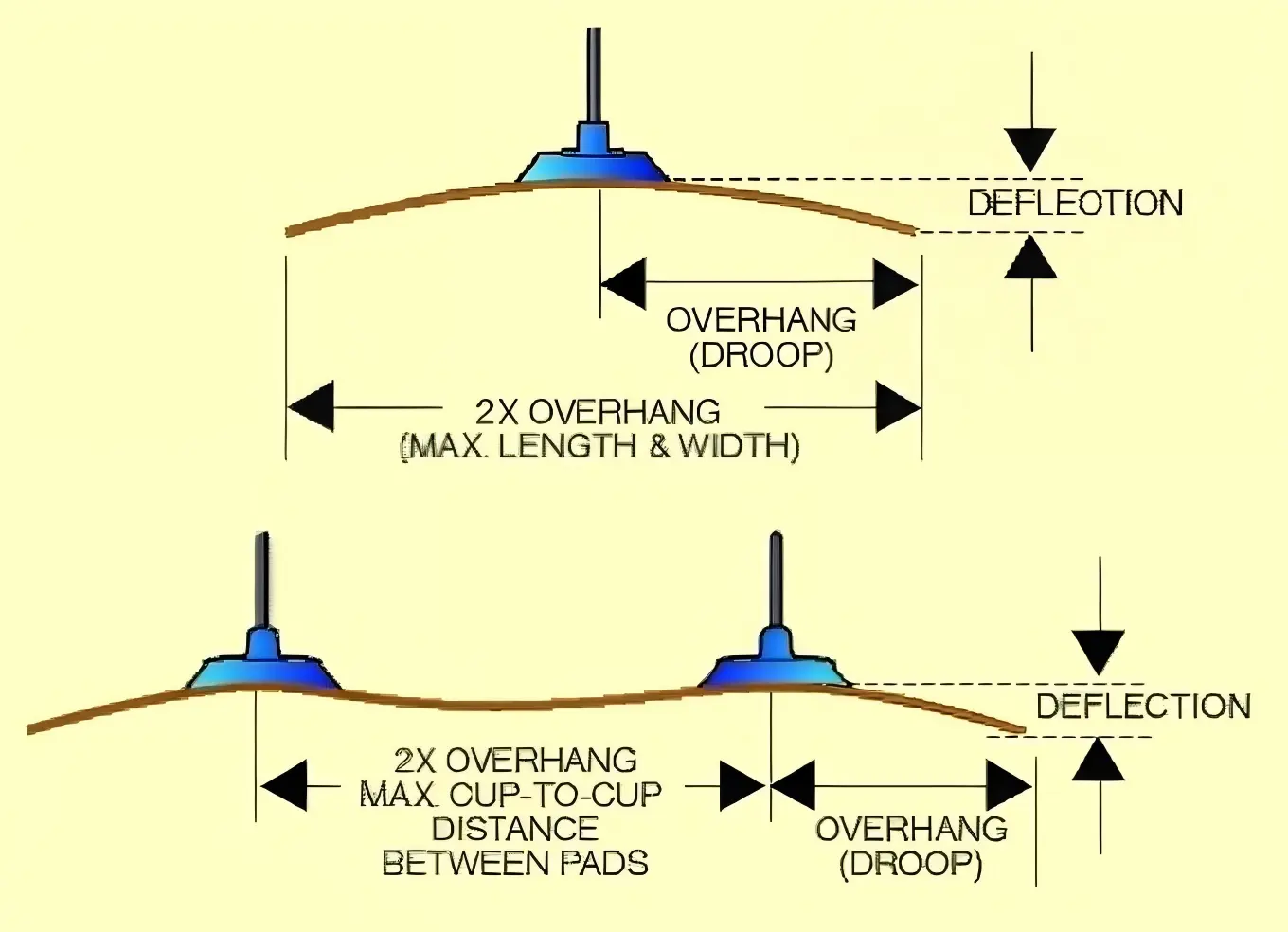
For example, a thin stainless steel sheet may require a much smaller allowable overhang than a thicker and stiffer plate. If four suction cups can lift the sheet by weight but the overhang is too large, the system may need six or eight suction cups to shorten support spacing and keep the sheet flat during lifting.
The diameter and lip structure of the suction cups should also match the sheet surface. Smooth cold-rolled sheets may use smaller-diameter cups, while rough or textured hot-rolled sheets may need larger cups or soft-lip cups to compensate for leakage.
Choosing What Suits You Goes Beyond "Good Enough"
When the frame size and suction cup layout match the real sheet conditions, the equipment becomes easier to use. Vacuum alarms are reduced, the lifter fits the laser cutter or press more smoothly, and operators can load and unload sheets with better stability.
Proper selection also extends equipment service life. The vacuum pump, valve set, suction cups, and frame operate closer to their intended working range. This reduces unnecessary air flow, excessive cup compression, structural fatigue, spare parts consumption, and long-term maintenance cost.
Related BILLIONS LIFTER Solutions
FAQ
Is more suction cups always safer for sheet metal lifting?
No. More suction cups can improve support, but only when the frame and vacuum zones match the sheet size. Too many cups on the wrong frame may cause air leakage, wasted energy, and poor handling of smaller sheets.
What causes sheet metal to drop during vacuum lifting?
Common causes include excessive overhang, sheet bending, air leakage from rough surfaces, insufficient safety factor, incorrect cup diameter, and cups that do not fully contact the sheet.
What information is needed to select a sheet metal vacuum suction cup system?
Useful information includes maximum and minimum sheet size, sheet weight, thickness, material, surface condition, lifting direction, cycle speed, and whether the equipment needs to work with a laser cutting machine, bending machine, robot, or crane.
Need help calculating the right suction cup layout?
Send BILLIONS LIFTER® your sheet size, material, thickness, weight, and handling process. Our team can help you match the frame size, suction cup quantity, and vacuum configuration for safer and more efficient production.