

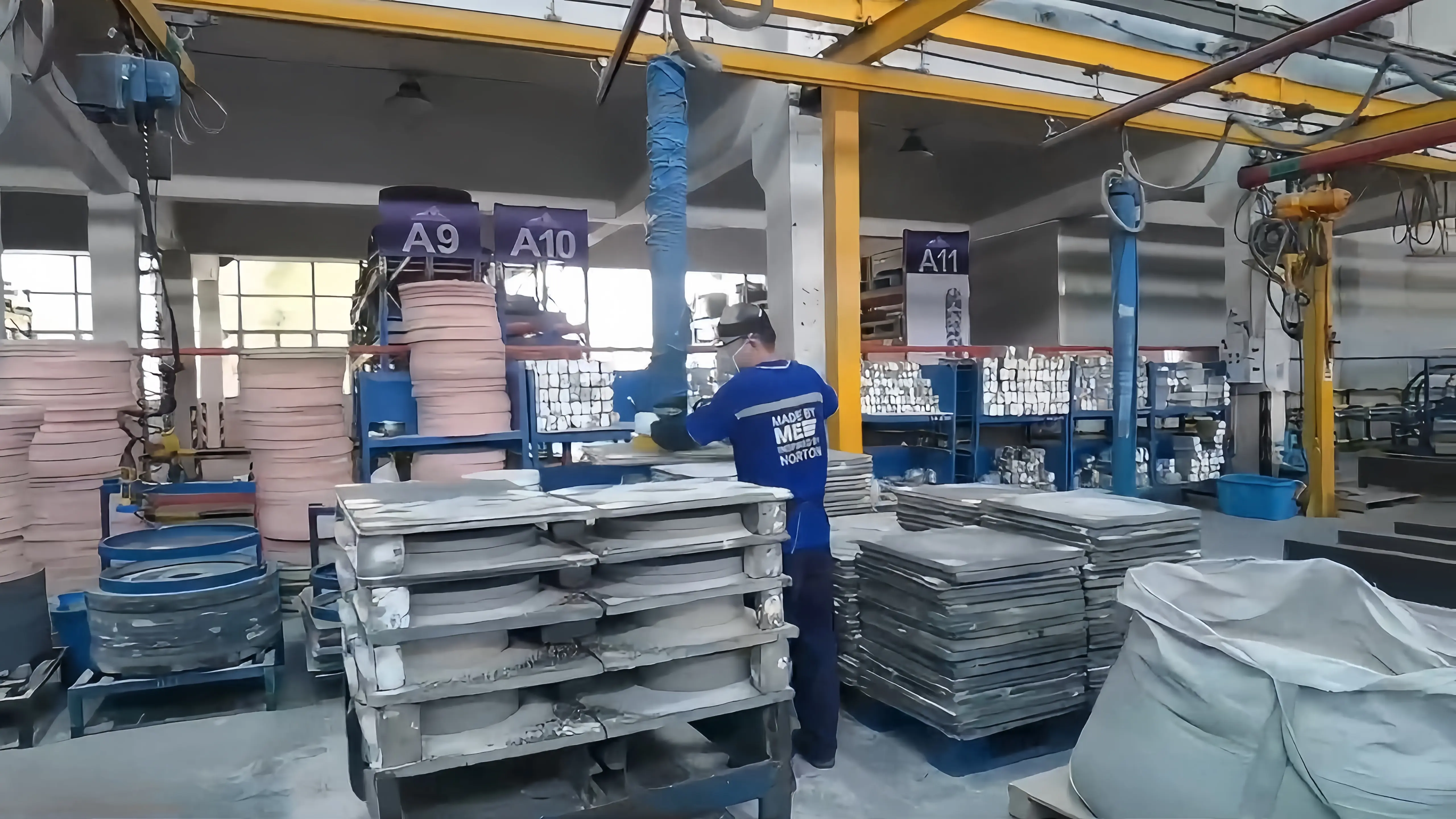
For a German stone processing workshop handling quartz, granite, and decorative slabs, BILLIONS LIFTER® supplied a vacuum tube lifter with a sponge vacuum pad to make repeated lifting, turning, and positioning safer for one operator.
The Challenge: Heavy Stone Slabs With Uneven Surfaces
ZT-Tuning GmbH is a German company specializing in precision cutting and installation of quartz, granite, and decorative slabs. In its workshop, single rough or polished stone slabs can weigh up to 50 kg and must be repeatedly lifted, flipped, and precisely positioned during daily production.
The challenge is not only weight. Many stone slabs have natural texture depressions, rough backs, or uneven areas left from processing. Conventional suction cups may fail to create a stable seal on these surfaces, creating the risk of air leakage, unstable gripping, edge damage, or worker injury.
The Solution: Sponge Vacuum Pad + Vacuum Tube Lifter
After comparing different handling methods, ZT-Tuning GmbH introduced a BILLIONS LIFTER® vacuum tube lifter equipped with a specialized sponge vacuum pad. This combination was selected because it can adapt to uneven stone surfaces while keeping operation simple for one worker.
1. Adapts to rough and uneven stone surfaces
The high-resilience closed-cell sponge works with the vacuum chamber to fill texture depressions and minor surface undulations. Even on rough backs or wavy surfaces, the pad conforms quickly and helps maintain a stable vacuum level, reducing leakage and slippage risk.
.webp)
2. One operator can lift, turn, and position the slab
The vacuum tube lifter uses pneumatic lifting to balance the slab's weight. The operator holds the handle lightly and can guide the slab for translation, rotation, and accurate placement onto cutting tables or CNC machines. Work that previously required two people can become a single-person operation.
3. Multiple safety features support daily production
The equipment is designed with air-loss protection, power-failure protection, and slow release. If compressed air is interrupted, the vacuum pad helps keep the slab locked. If the control system fails, mechanical self-locking helps maintain the vacuum state. During placement, gradual pressure release lets the operator set the stone down gently and avoid sudden impact.
Video: Vacuum Tube Lifter for Stone Slab Handling
Results After Three Months
Tasks that previously required two people can now be completed by one operator in seconds.
Stable gripping and slow release helped reduce bumps, slips, and potential material loss.
Worker complaints of back strain dropped to zero, and post-shift fatigue was greatly reduced.
The sponge vacuum pad handles slabs with different thicknesses and surface textures without frequent pad changes.
Related BILLIONS LIFTER Solutions
FAQ
Can a vacuum tube lifter handle uneven stone surfaces?
Yes, when the lifting system uses a suitable sponge vacuum pad. The sponge helps conform to rough backs, natural texture depressions, and minor surface undulations, improving the seal compared with standard flat suction cups.
Why is slow release important for stone slab handling?
Stone slabs can be expensive and fragile at the edges. Slow release lets the operator place the slab gently instead of dropping it suddenly, reducing impact, chipping, and positioning errors.
What information is needed before selecting a vacuum lifter for stone slabs?
Useful details include slab weight, dimensions, thickness, surface texture, handling direction, rotation requirements, working height, available compressed air, and whether the slab must be positioned on a cutting table, CNC machine, or installation fixture.
Need a safer way to handle heavy or uneven slabs?
Share your slab size, weight, surface condition, and workflow with BILLIONS LIFTER®. Our team can help match the right vacuum tube lifter, sponge pad, and safety configuration for your workshop.